Transaction Simulation, Risk Assessment, and Portfolio Tracking in DeFi
23/08/2026 - 11:16
A common misconception is that a transaction is safe because the wallet displays the correct token name, contract address, and gas estimate. Those details matter, but they do not answer the more important question: what will the transaction actually do after it is executed? In DeFi, a familiar-looking approval can authorize a contract to move assets, while a swap can produce an unexpectedly poor outcome because of price impact, routing, or changing liquidity. The difficult part is not signing a transaction. It is understanding its consequences before signing.
Transaction simulation helps by treating a proposed transaction as a testable state change rather than a line of opaque data. Portfolio tracking adds a second layer: it shows what assets and permissions exist before and after activity across multiple networks. Used together, these tools can improve decision quality for US-based DeFi users, but neither is an oracle. Simulation depends on assumptions and current chain state; portfolio views can be incomplete; and neither tool removes the need to evaluate the protocol, the asset, or the signer’s own behavior.
What transaction simulation actually reveals
A wallet transaction normally contains instructions for a blockchain account to call a smart contract. The wallet may show the destination, method, gas cost, and some decoded parameters. A simulation goes further by executing the proposed call against an available representation of the current network state without broadcasting it as a finalized transaction.
The useful output is not simply “success” or “failure.” A meaningful simulation can indicate which assets are expected to leave the wallet, which assets may arrive, whether an approval changes spending authority, and whether the call would revert. It may also expose a contract interaction that is technically valid but economically undesirable. That distinction is crucial: a transaction can execute successfully and still be harmful.
Consider a token swap. A simulation may show the expected output token, the amount received, and the effect of slippage settings. If the result is materially different from the user’s intention, the problem may be a thin liquidity pool, an unfavorable route, a manipulated price, or a parameter error. The simulation does not prove that the future execution will match the preview, because other transactions can alter the state before inclusion. It does, however, make the intended state change inspectable.
Approvals deserve particular attention. An approval does not usually transfer tokens immediately; it grants a spender permission to do so later. The risk therefore involves both the current transaction and the future behavior of the approved contract. A wallet that flags a large or unlimited allowance is not declaring that theft will occur. It is identifying a durable permission that expands the consequences of a compromised, malicious, or incorrectly identified spender.
Why a warning is not a risk score
Security interfaces often present warnings, labels, or risk indicators. These are useful for attention management, but users should resist treating them as universal probabilities. A warning may reflect a contract interaction, an unusual approval, an unrecognized address, or a simulation mismatch. It rarely captures every relevant variable, including the economic quality of a token, governance risk, bridge dependence, oracle design, or the possibility that a legitimate contract has been upgraded.
A more reliable mental model separates four questions. First, is the destination the contract the user intended to contact? Second, what state changes does the call request? Third, can the transaction be executed safely under current conditions? Fourth, is the broader strategy sensible even if execution is technically correct? Transaction simulation is strongest on the second and third questions. It is only a partial answer to the first and generally cannot answer the fourth.
This is why a successful simulation should not be confused with a safety certification. A malicious contract can simulate successfully. A compromised front end can construct a transaction that does exactly what it was programmed to do while violating the user’s expectations. Conversely, a legitimate transaction can generate a warning because its contract is new, its behavior is complex, or the simulation environment cannot resolve every dependency.
Portfolio tracking as a security control
Portfolio tracking is often treated as a convenience feature for calculating balances. Its more important role is establishing a baseline. If a user knows which wallets, networks, tokens, staking positions, and allowances should exist, unexpected changes become easier to detect.
That matters because DeFi risk is distributed across time. A user may sign an approval on one day, interact with a protocol later, and only notice an unauthorized transfer after the relationship between those actions has been forgotten. A cross-chain portfolio view can reveal that an address holds dormant assets on a network the user rarely visits, or that a token balance changed after a contract interaction that appeared routine.
Still, portfolio tracking has boundaries. Token balances may be difficult to interpret when assets use nonstandard metadata, represent claims on off-chain systems, or depend on complex accounting. Net worth estimates can also be misleading when liquidity is low, prices are stale, or a token’s quoted market value cannot be realized at the displayed amount. A dashboard is therefore best used as an accounting and monitoring aid, not as an independent valuation authority.
The combination of simulation and tracking creates a stronger workflow. Before signing, simulation asks, “What is this transaction expected to change?” After signing, portfolio tracking asks, “Did the wallet and its permissions change as expected?” The first protects against immediate misunderstanding; the second helps identify drift, forgotten approvals, and unusual activity over time.
Comparing practical approaches
Wallet-native simulation
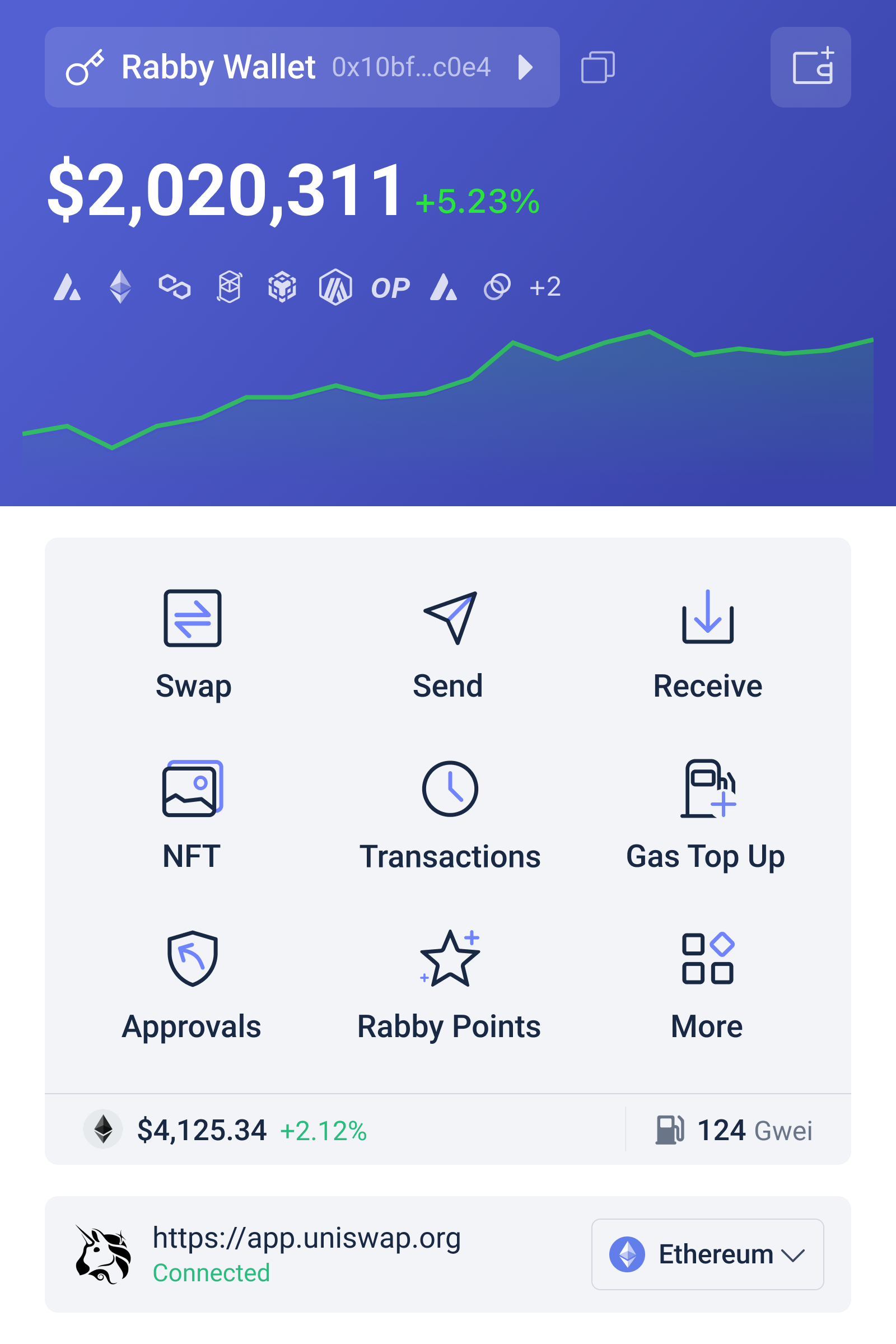
A wallet with integrated simulation offers the shortest path from transaction intent to review. It can present decoded actions in the same interface where the user signs, reducing the chance that the user copies raw calldata into an unfamiliar tool. For users moving among Ethereum and other EVM-compatible chains, a wallet such as rabby can be useful because transaction review, chain context, and portfolio visibility are brought closer together.
The trade-off is dependence on the wallet’s interpretation and simulation infrastructure. Complex calls may be summarized imperfectly, external data may be unavailable, and a warning can be difficult to interpret without protocol knowledge. Convenience improves the review process, but it does not replace independent judgment.
Block explorers and contract interfaces
Block explorers provide valuable transparency: users can inspect contract addresses, verified source code when available, historical transactions, token holders, and allowance activity. Direct interaction with a contract interface can be appropriate for advanced users who need precise control over parameters.
The cost is cognitive and operational. Raw contract methods are easier to misuse, verification may be absent or incomplete, and historical activity does not prove future behavior. Explorers are excellent investigation tools, but they are not automatically better transaction planners.
Dedicated portfolio and allowance dashboards
Specialized dashboards can offer richer historical analysis, alerts, and cross-wallet organization. They are particularly useful for users managing several addresses or separating long-term holdings from active DeFi accounts.
The sacrifice is another layer of data dependency. Third-party indexing may lag the chain, omit unusual positions, or classify assets incorrectly. Connecting a wallet to a viewing service can also create privacy considerations, even when the service cannot move funds. Users should distinguish read-only monitoring from signing authority and review permissions accordingly.
A reusable review framework
Before approving a transaction, begin with intent rather than the interface. State in plain language what should happen: exchange one asset for another, deposit into a lending market, withdraw liquidity, or grant a limited allowance. If the wallet’s simulation describes a different action, stop. This simple comparison catches a class of errors that technical users can otherwise overlook when moving quickly.
Next, inspect the assets leaving and entering the wallet. Watch for unexpected native-token transfers, approval changes, wrapped assets, or a recipient address that does not match the intended destination. For swaps, compare minimum received with the amount you would regard as acceptable, not merely with the optimistic quoted output.
Then assess durability. A one-time transfer and a standing approval have different risk profiles. A transaction that changes permissions may matter long after the visible operation is complete. Periodic allowance review is especially important for wallets that interact with many protocols, because accumulated permissions can become an overlooked attack surface.
Finally, compare the post-transaction portfolio with the pre-transaction baseline. If the expected position is a receipt token, a debt position, or a staked derivative rather than the original asset, make sure the tracking system represents that distinction clearly. A balance that looks smaller or unfamiliar is not necessarily a loss, but unexplained change should be investigated before further signing.
Where simulation breaks down
Simulation is a snapshot, while blockchains are competitive environments. Between simulation and inclusion, another user can trade against a pool, a validator or builder can order transactions differently, or a protocol state variable can change. Slippage limits and deadline parameters reduce some uncertainty, but they cannot eliminate market and execution risk.
There are also semantic limits. A simulation may show that a call succeeds without evaluating whether the received asset is economically sound, whether an oracle can be manipulated, or whether a bridge’s security assumptions are acceptable. In lending, for example, a deposit may execute correctly while liquidation risk remains driven by collateral volatility and protocol parameters. Technical success and financial success are different categories.
The near-term implication is conditional rather than absolute: as wallets improve transaction interpretation and cross-chain monitoring, users may become better at catching routine mistakes before signing. The benefit will be greatest when interfaces expose uncertainty instead of reducing every situation to a reassuring label. What to watch is whether tools show the assumptions behind a simulation, how they handle upgrades and proxies, and whether they make persistent permissions as visible as one-time transfers.
Frequently asked questions
Does a successful simulation mean a DeFi transaction is safe?
No. It means the proposed call can execute under the simulated conditions and produces the displayed result. It does not establish that the contract is trustworthy, that the asset has sound economics, or that the result will remain unchanged before the transaction is included.
Why should I review allowances if I already use transaction simulation?
Simulation reviews a proposed action, while an allowance can create continuing authority. A contract may not move tokens during the approval transaction, but it may be able to spend them later. Reviewing and reducing unnecessary allowances limits the consequences of future contract compromise or mistaken interaction.
Can portfolio tracking replace manual transaction review?
No. Portfolio tracking is strongest after activity, when it helps confirm balances, permissions, and positions. It may not explain why a transaction is dangerous before signing, and its valuations or classifications can be incomplete. Use it as a monitoring layer alongside, not instead of, transaction review.
The sharpest lesson is that DeFi security is not a single warning displayed at the moment of signing. It is a loop: define the intended action, simulate the state change, examine permissions and economic assumptions, then verify the resulting portfolio. That loop cannot make decentralized systems risk-free. It can, however, convert an opaque act of approval into a sequence of questions the user is capable of answering.